
Introduction
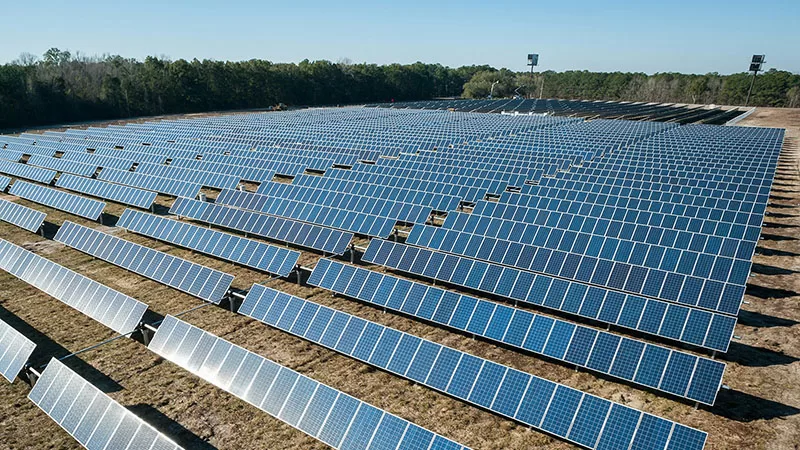
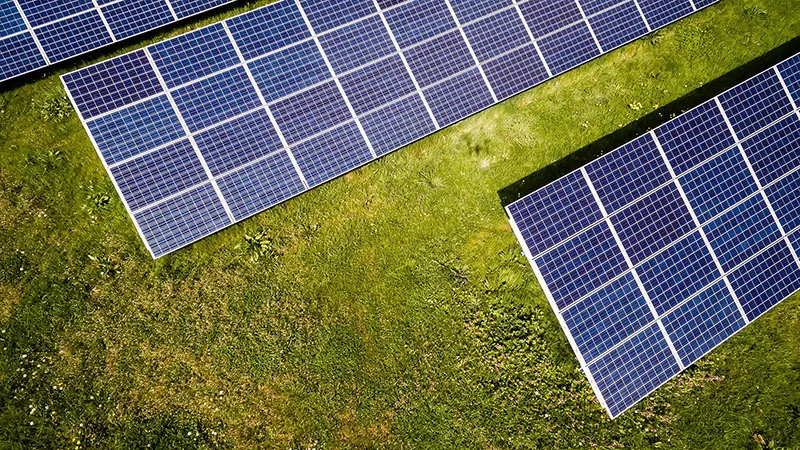
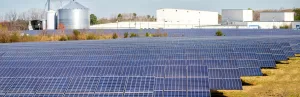
As an innovative technology, agrivoltaics enables the dual use of land by installing solar panels on farmland, pastures, or greenhouses. This approach significantly improves land efficiency, generating both energy and agricultural output. But one common question remains—do the solar panels block sunlight and negatively impact crop growth?
Potential Impacts of Agrivoltaics on Crop Growth
Installing solar panels on farmland, pastures, or greenhouses not only provides a source of electricity for farms but also improves overall land-use efficiency. However, while enhancing energy utilization, the presence of solar panels also introduces complex and multifaceted effects on the crop growing environment. These impacts may offer significant benefits for plant growth, but under certain conditions, they can also present specific challenges.
1. Positive Impacts
Shade Reduces Heat Stress
Agrivoltaic systems help mitigate crop heat stress during hot weather by providing shade through solar panels. According to a study by the Fraunhofer Institute for Solar Energy Systems (Fraunhofer ISE) in Germany, high temperatures can reduce photosynthetic efficiency by 15%–30%, potentially causing leaf scorch and stunted growth. The shade from solar panels can lower ground surface temperatures by an average of 3°C to 5°C, with even greater cooling effects observed at midday in summer. In a tomato trial, the area under solar panels showed a 20% reduction in leaf damage and a 10%–15% increase in growth rate. Additionally, the moderated sunlight extended the optimal period for photosynthesis in some crops, providing more stable growing conditions.
Improved Soil Moisture
The shading effect of solar panels not only reduces direct sunlight but also decreases surface evaporation rates, significantly increasing soil moisture. In a study focused on arid regions, researchers found that soil moisture in areas covered by agrivoltaics was 15%–25% higher than in uncovered plots. In a trial field in Southern Europe, the application of solar panels reduced irrigation frequency by 20%–30%, saving 3,000 to 4,000 cubic meters of water per hectare annually. Enhanced soil moisture not only conserves water resources but also improves water availability for crop roots, boosting drought resistance—especially for shade-tolerant forage grasses and high water-demand crops such as rice.
Improved Light Utilization
Specially designed solar panels can convert intense direct sunlight into more diffused light, creating a more suitable lighting environment for crops. According to a 2021 agrivoltaic study in Japan, an increased proportion of diffused light can improve photosynthetic efficiency by 15%–25%, particularly benefiting shade-preferring crops like spinach and strawberries. In one trial, strawberries grown under agrivoltaic conditions had 8% higher sugar content and 12% more chlorophyll. Furthermore, scientifically planned panel layouts ensure more even distribution of diffused light, reducing shading effects and optimizing both yield and quality. Another study found that under agrivoltaic conditions, rice fields achieved over 10% higher average yields without increasing water or fertilizer input.
2. Potential Negative Impacts
Excessive Shading May Inhibit Photosynthesis
While solar panels help lower temperature, they may also reduce the light intensity required for crop growth—particularly for light-demanding crops. A 2020 study by the U.S. Department of Agriculture (USDA) showed that when shading exceeded 40%, the photosynthetic efficiency of corn decreased by about 12%, significantly affecting growth. Additionally, prolonged shading can extend the growing cycle of certain crops, delaying harvest. For example, sugarcane grown under 50% shading took 15 more days to mature, and plant height decreased by 20%.
Uneven Light Distribution May Cause Irregular Crop Growth
Fixed solar panels may cast uneven shadows, which can significantly affect the growth conditions of crops. According to a 2020 field trial by Fraunhofer ISE, crops in permanently shaded areas had 25%–30% lower biomass compared to those in fully lit areas. In one test plot, the number of tomatoes under panels decreased by 18%, while fruits in sunlit zones were more numerous but had an average weight reduction of 5%. Uneven lighting may also lead to greater differences in plant height, affecting harvesting efficiency.
Potential Impact on Crop Characteristics
Shading not only affects growth speed but can also alter crop quality and appearance. In a 2021 study by the French National Research Institute for Agriculture, Food and Environment (INRAE), grape sugar content dropped by around 5% under 30% shading, and the skin color became lighter. Similarly, while strawberries under high shading maintained yield, the average ripening time was extended by 7 days and sweetness slightly declined. Such changes may present challenges for growers of high-value crops with strict quality standards, requiring additional management measures to compensate.
How to Minimize the Impact of Agrivoltaics on Crop Growth
Optimized Solar Panel Design
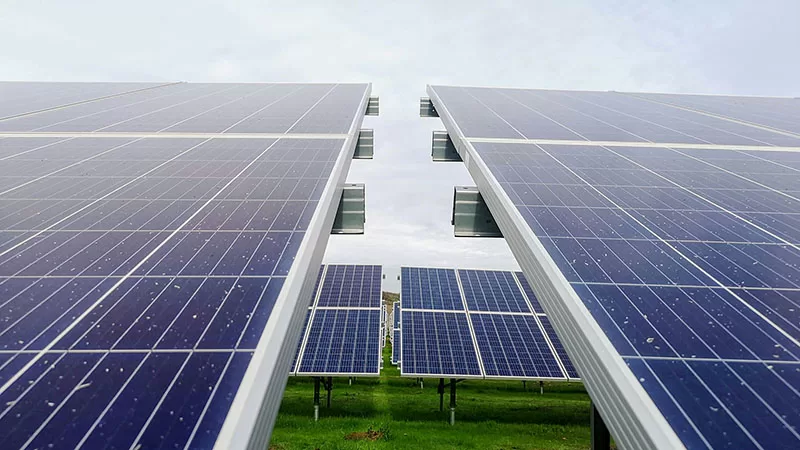
By incorporating bifacial solar panels, agrivoltaic systems can improve power generation efficiency while reducing adverse effects on crop growth. Bifacial modules capture sunlight from both the front and reflected light from the ground, effectively increasing the proportion of diffused light and enhancing the photosynthetic environment for crops. According to a 2021 study by Fraunhofer ISE, bifacial modules generate 15%–25% more electricity than traditional monofacial panels and increase the intensity of diffused light in shaded areas by 20%–30%. When combined with dynamic adjustment technologies, the angle of the panels can be flexibly adjusted based on seasonal and crop-specific needs—for example, increasing the tilt angle in summer to enhance shading and reduce heat stress, and reducing the tilt angle in winter to allow more direct sunlight. Data shows that under a dynamic bifacial system, wheat photosynthetic efficiency improved by 15%–20%, irrigation frequency decreased by 25%, and overall water consumption was significantly reduced.
Scientific Layout and Crop Selection
Strategic panel layout and crop selection are also essential to minimizing the impact of agrivoltaics on crop growth. Optimizing the spacing between panels helps reduce the extent of permanent shaded areas while maintaining energy output. Arranging panels in a 1:2 or 1:3 ratio ensures more even light distribution and lessens the negative effects on crop yield. Research from a test field in Germany showed that with optimized spacing, wheat yields were only reduced by 3%–5%, while photovoltaic efficiency increased by 12%–15%. In addition, crop selection should account for the shading characteristics of the PV system. Shade-tolerant or diffused-light-loving crops (such as spinach and forage grasses) perform especially well under agrivoltaic conditions.
Environmental and Economic Benefits of Agrivoltaics
The innovation of agrivoltaics offers farmers significant advantages, helping them better cope with modern agricultural challenges. From an environmental perspective, agrivoltaics replaces fossil fuels with clean energy, reducing approximately 700 tons of CO₂ emissions annually for every megawatt of installed solar capacity. It also reduces surface water evaporation, improves soil moisture, and enhances land-use efficiency—making it particularly suitable for arid regions or areas with limited farmland. Economically, agrivoltaics generates additional income for farmers, with an estimated annual increase of €2,000–€5,000 per hectare, while also lowering irrigation and energy consumption costs, thereby reducing overall operational expenses. In addition, agrivoltaic projects attract policy support and investment, create jobs in rural areas, and drive local economic development.
Conclusion
By installing solar panels on farmland, pastures, and greenhouses, agrivoltaic technology enables more efficient land use and brings notable environmental and economic benefits. Environmentally, agrivoltaics reduces carbon emissions by approximately 700 tons per megawatt per year, lowers surface temperatures and evaporation rates, and improves soil moisture—creating a more sustainable cultivation environment for arid and water-scarce areas. Moreover, the shading provided by solar panels helps alleviate crop heat stress and improves the quality of diffused light, thereby enhancing photosynthetic efficiency.
While challenges such as excessive shading or uneven light distribution may arise, they can be effectively addressed through dynamic adjustment systems, bifacial solar technology, and scientific panel layout and crop selection. Overall, agrivoltaics not only provides economic returns for farmers but also offers an innovative path for integrating sustainable agriculture with renewable energy. With ongoing technological advancement and policy support, the future of agrivoltaic applications looks increasingly promising.
Since 2008, Maysun Solar has been dedicated to producing high-quality photovoltaic modules. Our range of solar panels, including IBC, HJT and TOPCon panels, and balcony solar stations, are manufactured using advanced technology and offer excellent performance and guaranteed quality. Maysun Solar has successfully established offices and warehouses in many countries and built long-term partnerships with top installers! For the latest quotes on solar panels or any photovoltaic-related inquiries, please contact us. We are committed to serving you, and our products provide reliable assurance.
Reference:
Bundesnetzagentur. (2023, July 10). Erneuerbare-Energien-Gesetz (EEG): Unterstützung für Agri-PV-Projekte in Deutschland. https://www.bundesnetzagentur.de/eeg/agri-pv-foerderung/2023-juli
Fraunhofer ISE. (2021, March). Agri-photovoltaics: Synergies between agriculture and solar power. https://www.ise.fraunhofer.de/en/key-topics/agri-photovoltaics.html
USDA. (2023, February 5). Agrivoltaics: Combining solar energy and agriculture in the United States. https://www.usda.gov/agrivoltaics-us
Optics Journal. (2023, May 20). Analysis of Total Irradiance Model for Bifacial Photovoltaic Modules. Retrieved from https://opticsjournal.net/Articles/OJ562209529f113c30/Abstract
You may also like:

430–460W or 600W+? How Should You Choose Solar Panel Power for Rooftop Projects?
Compares 430–460W solar panels and 600W solar panels in C&I rooftop projects, showing that solar panel selection should prioritise roof compatibility and system stability.
Changes in the European Solar Policy and Market in 2026
Europe’s 2026 solar policy and grid changes are reshaping solar panel selection, shifting project returns towards market-driven mechanisms and highlighting the roles of TOPCon, HJT and IBC solar panels.
Why European EPCs Are Reassessing Large-Format Solar Panels
European EPCs are re-evaluating large-format solar panels. Panel size directly affects installation risk, system compatibility, and solar project ROI stability.
Do Vertical Bifacial Modules Really Deliver Additional Yield?
Vertical bifacial PV systems are gaining increasing attention across Europe. This article explores under what conditions a vertical layout can create additional value, how bifacial gain is influenced by site conditions, and which project types are best suited to this design.
Which rooftop scenarios make 700W+ solar panels a risk?
An analysis of the practical limits of 700W+ high-power solar panels on residential and commercial rooftops, and how space, load capacity, self-consumption and maintenance affect real returns.
February News in the Photovoltaic Industry
February overview of Europe’s photovoltaic market: module price trends, a rebound in the German PPA market, progress in Italian agrivoltaics and regulatory shifts in France, highlighting key industry signals.

I’m curious to know if certain crops actually thrive under the partial shading from solar panels. Have there been studies on which types of crops benefit the most from this system, or does it depend more on the location?
Thank you for your interest and thoughtful question.
Several studies have shown that certain shade-tolerant crops can perform well under the partial shading provided by solar panels in agrivoltaic systems. For example, leafy greens such as lettuce, spinach, Swiss chard, broccoli, and root vegetables like carrots and radishes often benefit from the moderated temperature, reduced heat stress, and improved soil moisture retention. These advantages are especially significant in hot or arid climates.
One notable study by the University of Arizona found that cherry tomatoes and chili peppers grown under solar panels in dry environments exhibited better growth compared to those in full sun, due to more stable temperatures and reduced water loss.
That said, crop performance in agrivoltaic systems also depends on various factors such as local climate conditions, panel installation height and tilt, soil type, and more. Therefore, a tailored system design is essential to match specific crops and regional conditions.
We will continue to share more case studies and research findings related to agrivoltaics and crop compatibility. Please feel free to follow us and join the conversation if you’d like to explore this topic further.
I appreciate how the post touches on the balance between energy and agriculture. Curious if there are particular crops that thrive more consistently under these systems?
Thank you for your great question! Some studies suggest that crops like lettuce, spinach, and certain berries perform well under agrivoltaic systems due to their tolerance to partial shading. It’s definitely a growing area of research with exciting possibilities.
This is a really timely topic—agrivoltaics has so much potential, but you’re right to highlight the concern about light availability for crops. Some studies suggest that partial shading from solar panels can actually help certain crops by reducing heat stress and water loss, especially in hotter climates. It would be great to see more long-term data on how different crops respond under varying panel setups.
Thank you for highlighting such an important point! Partial shading benefits, especially in hotter climates, are indeed a fascinating aspect of agrivoltaics. We’re also looking forward to seeing more long-term studies on how different crop types adapt under varied photovoltaic setups.