Why do some Solar Panels develop quality issues after years of operation?

Why do some photovoltaic modules develop quality issues after years of operation?

In photovoltaic projects, modules often operate stably during the first few years, while quality or performance issues gradually emerge only after extended operation. Such phenomena are usually not accidental, but closely related to how different photovoltaic module structures respond to long-term stress and environmental influences.

From a long-term operational perspective, this article examines the structural differences that affect the long-term risks of photovoltaic modules, and explains why these differences are often difficult to identify at the initial stage of a project—helping decision-makers develop a more rational understanding of long-term performance and risk.

Table of Contents

Why do quality issues often only appear after years of operation?

In many photovoltaic projects, modules tend to perform stably during the first years after commissioning, with only minor changes in power output and efficiency.

This often leads to an intuitive assumption: if a module operates normally in the early stage, it is unlikely to develop significant problems later in its lifecycle.

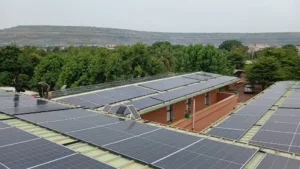
Quality issues in photovoltaic modules often do not appear in the early stage and gradually become visible over time.

From a long-term operational perspective, this assumption is inherently flawed. Photovoltaic modules do not operate in a static environment; instead, they are continuously exposed to temperature variations, mechanical loads, and environmental factors. These stresses act on materials and structures in a gradual, cumulative manner over time.

The real differences lie in how a module’s structure absorbs and distributes these stresses. Some modules are more prone to local stress concentration. Such effects are rarely visible in the short term, but are progressively amplified through repeated thermal cycles and mechanical loading, eventually manifesting as performance degradation or structural issues. By contrast, structures with clearer stress paths and more uniform stress distribution tend to show more controllable long-term performance.

Because these differences mainly unfold over time, many quality issues are difficult to identify at the early stages of a project. They are not “unexpected failures” after years of operation, but rather the long-term outcomes of module selection decisions made at the outset.

Why are long-term risks not the same for different photovoltaic modules?

Long-term risk is not determined by a single parameter, but by how the overall module structure behaves under sustained stress over time.

In real-world projects, a common misconception is that if modules have similar rated power, efficiency, and certification standards, their long-term operational risks should also be broadly comparable.

Even under similar installation conditions, different modules can exhibit distinct stress transfer paths when exposed to long-term stress. These differences are not immediately visible during the early phase of operation, but gradually widen over time.

Many long-term risks do not stem from a single extreme event, but from the accumulation of repeated stresses acting on the structure. When a structure has limited ability to distribute these stresses, risk tends to be released in a more concentrated manner. By contrast, when stress paths are clearer and stress distribution is more uniform, long-term performance is generally easier to keep under control.

As a result, differences in long-term risk between photovoltaic modules are largely determined by how their structural design manages stress over prolonged operation. This explains why, even in similar projects, the long-term performance of modules is often not entirely consistent.

Which structural differences are more likely to accumulate risk during long-term operation?

The long-term performance of photovoltaic modules is not determined by a single parameter, nor does it usually become evident at the early stage of a project. What truly creates divergence over time is how the structure manages various stresses during prolonged operation.

3.1 Is stress amplified locally, or distributed across the overall structure?

During long-term operation, a core issue for photovoltaic modules is how stress is absorbed and distributed along structural paths.

When a module structure relies more on local support points or a single load-bearing path, stress is more likely to concentrate in specific areas. Such concentration effects are gradually amplified over time through continuous thermal cycling and mechanical loading, eventually resulting in performance degradation or structural issues.

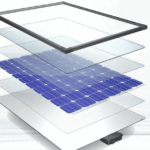
In some double-glass photovoltaic modules that use dual-side support or multi-layer structures, overall rigidity and load paths tend to be more evenly distributed. In these cases, long-term performance depends more on the stability of key structural nodes under repeated stress.

Risk is not eliminated, but released in a slower and more predictable manner.

3.2 Does structural complexity determine whether long-term behaviour is predictable?

The risks faced by photovoltaic modules often arise from the combined effect of multiple factors within structural paths.

As encapsulation layers, material interfaces, and load paths increase in number, the long-term behaviour of the structure becomes more difficult to predict.

Stability in early-stage parameters often only indicates that the system has not yet entered the phase of risk release; it does not reflect how the structure will evolve under sustained stress over time.

The more complex the structural paths, the more long-term performance depends on the simultaneous evolution of multiple conditions. Once deviations begin to occur, issues usually emerge later and are more difficult to correct through local interventions.

3.3 Why are these structural differences often difficult to detect at the early project stage?

In the early phase of operation, photovoltaic modules are typically in a relatively stable state, with limited fluctuations in key parameters.

This apparent stability can easily lead to the assumption that long-term performance has already been validated, when in reality the structure has not yet entered the risk release phase.

Long-term risk accumulates gradually over time. By the point when structural differences translate into observable issues, a long process of evolution has already taken place. Because of this inherent time lag, many potential differences are difficult to identify in the early stages of a project and are therefore more likely to be underestimated during the decision-making phase.

How can long-term risks of photovoltaic modules be avoided being underestimated at the decision-making stage?

In practical decision-making for photovoltaic projects, long-term risk is often underestimated because evaluation logic tends to favour indicators that can be verified in the short term.

What ultimately determines long-term performance is how the module structure responds to time, sustained stress, and uncertainty. These differences are difficult to quantify at the early stage of a project and cannot be clearly identified through one-off comparisons. Instead, they gradually amplify during operation, exerting a lasting impact on system stability and performance predictability.

What truly determines the long-term performance of photovoltaic projects is how the structure responds to time, stress, and uncertainty.

Therefore, to avoid underestimating long-term risk, a more comprehensive evaluation framework should be established during the decision-making phase. This means not only focusing on immediately visible metrics, but also understanding structural factors that only become apparent over time. Reaching consensus at this level is what gives subsequent module selection and technical discussions real long-term significance.

Maysun Solar supplies solar panels for the European market, focusing on structural stability and risk control under long-term operating conditions. Its portfolio includes double-glass modules designed to reduce system complexity at the design stage and improve the predictability of long-term performance, meeting practical engineering and compliance requirements.

Recommend reading

February News in the Photovoltaic Industry

February News in the Photovoltaic Industry

February overview of Europe’s photovoltaic market: module price trends, a rebound in the German PPA market, progress in Italian agrivoltaics and regulatory shifts in France, highlighting key industry signals.

Read More »

1 Comment

  1. Lukas Weber

    This sounds very familiar. My own rooftop system ran through a few winters without any noticeable problems, so at the time I didn’t think much about long-term structural differences.
    In hindsight, paying more attention to these aspects during the module selection might have led to more stable and predictable yields today. The point about issues building up slowly over years really makes sense.

Comments are closed