Table of Contents
Introduction
In the second half of 2025, the European solar market stands at a pivotal turning point where policy, pricing, and technology converge.
Over the past 18 months, the global solar supply chain has undergone a significant correction, with module prices dropping to historic lows and beginning to stabilize. China’s capacity consolidation efforts have eased export pressure, while Europe has largely cleared its inventory backlog.
On the policy front, Italy has launched its Repowering program, Germany is accelerating grid connections, and Spain is increasing subsidies — though implementation timelines remain uneven.
Business interest in deployment remains strong, but rising financing costs and delayed policy execution have postponed many projects. The industry is shifting from passive adjustment to structural transformation.
The current focus is moving from passive observation to active decision-making. With prices reaching the bottom, incentives accelerating, and evaluation standards evolving, the second half of 2025 represents a crucial window for optimizing deployment strategies.
Trend 1: PV Module Prices Bottom Out — Q3 Becomes a Key Procurement Window
Module prices are expected to hit bottom in Q3 2025 and rebound moderately in Q4, marking a critical window for businesses to lock in costs.
By the third quarter of 2025, solar module prices have largely settled into their lowest range. According to recent reports from major research firms such as InfoLink and TrendForce, changes across the supply chain have already become apparent:
TOPCon module prices remain stable at €0.13–0.14/W, down roughly 25%–30% from €0.18–0.19/W in early 2023;
PERC modules have dropped to around €0.11/W, compared to an average of €0.21–0.22/W in early 2023 — a total decline of 45%–50%;
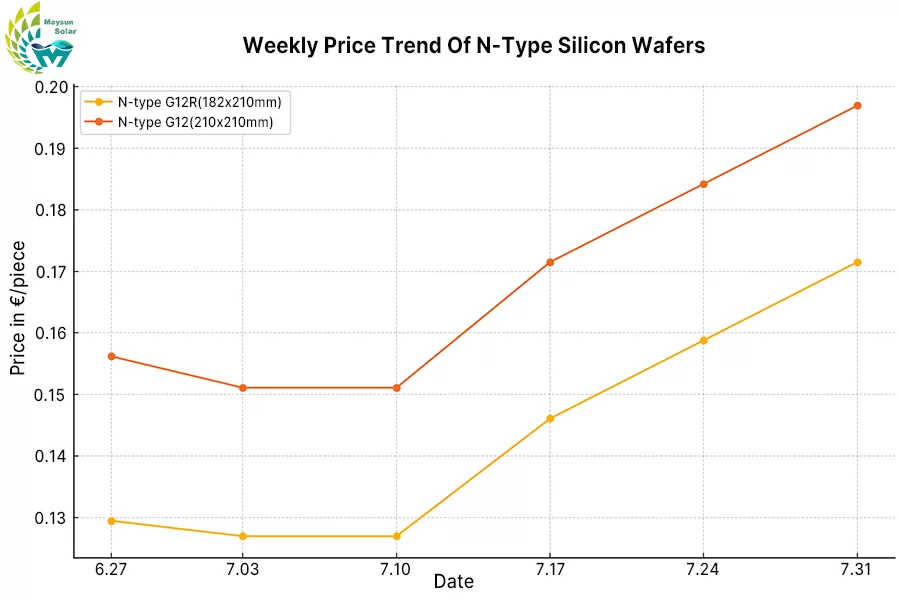
N-type G12R wafers (182×210mm) average €0.171 per piece, up 8.0% month-over-month, indicating rising upstream costs;
Leading manufacturers are operating at 50%–80% capacity, with production cuts taking effect and inventory clearance nearing completion.
From an investment perspective, the uptick in cell and wafer prices typically signals that module prices have bottomed out. As China’s capacity consolidation takes hold, silicon prices increase, and European stockpiles are cleared, the market has widely accepted current floor pricing. Buyer sentiment is shifting toward cautious restocking.
Note: Data source – InfoLink. The chart reflects average euro-denominated transaction prices for N-type G12R and G12 monocrystalline wafers between June 27 and July 31, 2025.
For companies with clear deployment plans, Q3 should be viewed as the strategic window for annual procurement:
Secure core project modules early in Q3 to optimize delivery timelines;
Avoid the risk of structural price increases ahead of Q4’s expected grid-connection rush;
Focus on the pace of price changes, rather than betting on further bottoming or a major rebound.
While prices have likely reached their lowest point, a brief wait-and-see period is still viable. However, aligning procurement with project timelines is essential to avoid missing this critical window.
Trend 2: Policy Implementation Accelerates — Deployment Conditions Are Now Fully Mature
Solar incentive programs across multiple European countries have entered the execution phase, significantly lowering the threshold for business deployment.
Following a period of policy rollout and adjustment in the first half of the year, the second half of 2025 marks a shift toward practical implementation. Policy pathways are now clearer, administrative processes more standardized, and deployment conditions are transitioning from uncertainty to readiness.
Italy: In early 2025, GSE officially launched the Repowering incentive program. Application channels and technical requirements have been clarified in several regions. Aging plants are now eligible for practical upgrades. In areas such as Lombardy and Emilia-Romagna, new subsidy windows have opened to support rooftop PV + storage retrofits, offering incentives of up to 40%, mainly targeting industrial roofs and farm-based projects — some of which are already registered.
Germany: As of May 2025, simplified balcony PV policies have come into full effect: optimized MaStR registration, standardized socket requirements, and no need for certified electricians — all reducing installation times significantly. The revised EEG mandates that grid connection approval for mid-sized projects must not exceed three months (previously over five months on average). Local subsidies have also been introduced by individual states (e.g. Bavaria), which can be combined with federal incentives.
Spain: In July 2025, IDAE announced a new funding round totaling €180 million to support both commercial and residential PV projects. Priority is given to small-scale distributed systems and agricultural cooperatives. Initial fund releases have begun in Catalonia, Andalusia, and other regions.
EU level: The CBAM mechanism enters its transitional phase in October 2025, requiring mandatory carbon reporting. This is expected to accelerate local solar deployment among energy-intensive industries. In parallel, the Energy Communities Regulation has officially taken effect, requiring member states to define subsidy and approval mechanisms by year-end. Germany, France, and Austria are expected to be among the first to implement.
With these developments, the second half of 2025 presents a fully viable deployment window. Most solar projects have shifted from “policy ambiguity” to “defined incentives.” Moreover, incentive programs are expanding from new installations to include upgrades of existing systems. A surge in project registration, grid connection, and funding applications is expected in Q3–Q4.
For companies already prepared, now is the time to engage with institutions like GSE, BAFA, and IDAE to secure incentives and clarify implementation timelines.
For projects still under evaluation, it is advisable to align with local policy schedules and allocate resources early — avoiding delays and bottlenecks during peak application periods.
Trend 3: Technology Diversification — Module Selection Shifts Toward Scenario-Based Adaptation
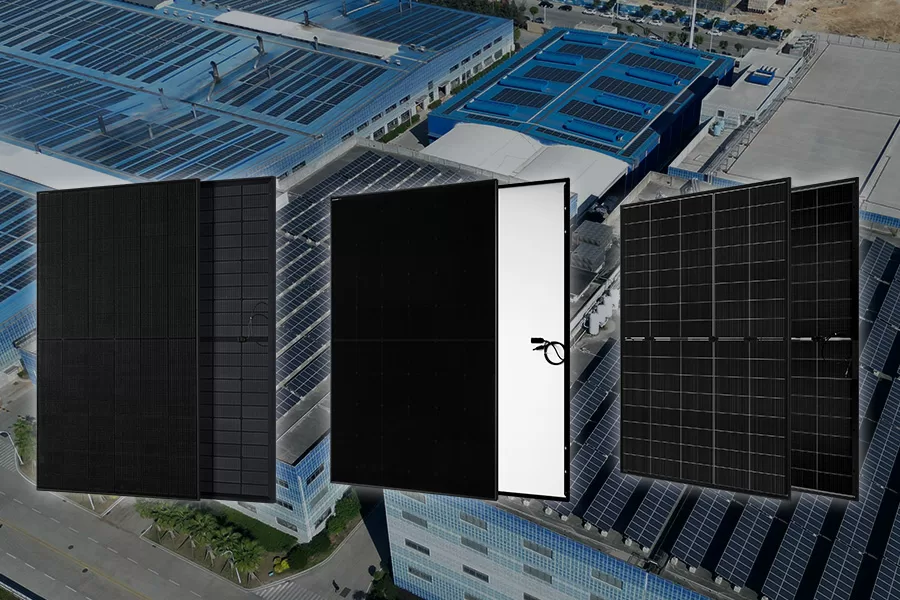
PV module selection is evolving from a single-minded focus on efficiency to a more nuanced approach based on project-specific conditions. Technologies like TOPCon, IBC, and HJT each offer distinct advantages depending on the deployment scenario.
Performance Comparison of Mainstream PV Module Technologies
| Metric | PERC Modules | TOPCon Modules | HJT Modules | IBC Modules |
|---|---|---|---|---|
| Temperature Coefficient (%/°C) | -0.35 | -0.32 | -0.243 | -0.29 |
| Shading Tolerance | Average | Good | Very Good | Excellent |
| Hot Spot Risk (Design-wise) | High | Moderate | Low | Very Low |
| Bifaciality | 70–75% | 80–85% | 90–95% | Monofacial |
| Appearance / Anti-glare | Standard | Standard | Enhanced | Premium (All-black, No Front Busbars) |
Note: Each PV technology has its own strengths. Selection should be based on local conditions such as ambient temperature, shading risks, aesthetic requirements, and energy yield structure. Chasing either efficiency or low cost alone may not suit every project—structural compatibility is key.
Module selection is a core part of system deployment strategy. Choosing the right module type can significantly improve long-term system stability and energy yield.
High-temperature regions or projects with summer peak loads: HJT modules and IBC modules, with their lower temperature coefficients, are better suited to minimize power loss under sustained heat. TOPCon modules strike a balance between performance and cost, making them ideal for budget-conscious installations.
Rooftops with load restrictions or visual design requirements: IBC modules feature a full-black, single-glass structure that is lightweight, anti-glare, and visually cohesive. They are well-suited for commercial complexes, educational institutions, and protected heritage sites where both structural and aesthetic considerations are important.
Sites with bifacial gain potential (e.g., reflective surfaces, industrial rooftops, agrivoltaic greenhouses): HJT modules or TOPCon modules are recommended to maximize rear-side energy gain. While PERC modules offer lower upfront costs, they fall short in bifacial performance and low-light response.
Areas exposed to partial shading, dust, or leaf fall: IBC and HJT modules maintain more stable output under weak light and partial shading. TOPCon modules can serve as a secondary option where budget or supply is constrained.
In the second half of 2025, module selection should return to its structural roots — prioritizing technologies that support stable energy generation and long-term financial returns.
Trend 4: Rising Financing Pressure — Zero-Investment Partnerships Reshape the Market Landscape
As financing pressure intensifies, zero-investment leasing model is set to become one of the mainstream deployment pathways for commercial and industrial solar in Europe during the second half of 2025.
Amid persistently high interest rates driven by the European Central Bank’s long-term policy stance, financing costs for PV projects remain elevated. Traditional self-financed models reliant on bank loans are facing tighter returns and slower PPA negotiations, reducing their overall appeal. In contrast, zero-investment collaboration models — requiring no upfront capital — are regaining traction, especially among small and medium-sized enterprises (SMEs) with limited cash flow, offering both feasibility and implementation advantages.
By leasing rooftop space to third-party investors, companies can avoid upfront investment while receiving fixed rental income or preferential electricity rates. This not only optimizes energy cost structures but also enhances local competitiveness and sustainability credentials.
Key benefits of the zero-investment rooftop leasing model include:
Energy cost optimization: Rooftop PV systems provide discounted electricity, effectively lowering operational expenses;
Enhanced ESG performance: Modern solar installations support better sustainability ratings and green brand image;
Operational outsourcing: Design, installation, and maintenance are handled by the investor, relieving internal resource demands;
Long-term price certainty: Secures predictable energy costs, shielding businesses from future market volatility.
However, third-party investors still require basic criteria for viable rooftop partnerships, such as: moderate roof size, minimum static load capacity of ≥25 kg/m², clear property rights, and stable company operations without major legal risks.
Before signing a rooftop PV lease agreement, a thorough technical and legal due diligence is essential to ensure project success and long-term financial stability.
Trend 5: Long-Term Stable Returns Become the Core of Project Evaluation
Starting in the second half of 2025, companies evaluating commercial and industrial PV projects should prioritize long-term return stability and operational reliability.
With rising interest rates, the gradual reduction of subsidies, and lengthening PPA negotiation cycles, the focus is shifting from short-term payback periods to LCOE (Levelized Cost of Energy) and overall system stability. Evaluation strategies are increasingly centered on the predictability of long-term returns and the system’s performance over its full lifecycle.
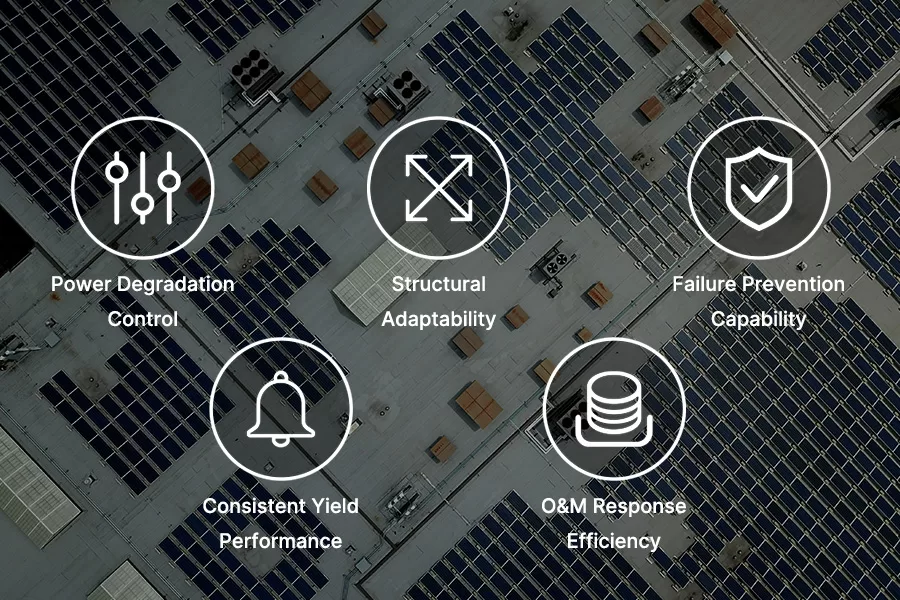
When assessing a commercial PV system, businesses should focus on five key dimensions:
Power degradation control: Choose modules with low annual degradation rates and strong low-light performance to ensure consistent energy output over 15+ years.
Structural adaptability: Evaluate system resilience under common environmental stressors such as high temperatures, snow load, wind pressure, and dust. Module selection should prioritize compatibility with local climate and structural conditions.
Failure prevention capability: Assess whether the system design includes protections against hotspots, arc faults, and weak-point amplification — all of which are critical for long-term safety.
O&M response efficiency: Determine if the system enables proactive fault detection, remote monitoring, and fast maintenance — all of which directly impact long-term operating costs and downtime risk.
Return consistency: Shift evaluation focus toward the stability of LCOE and long-term IRR, avoiding performance declines or cost overruns that could erode overall returns.
Evaluating a solar system from an asset-based perspective means assessing whether it is environmentally compatible for long-term operation, whether the technology aligns with expected return timelines, and whether roles and responsibilities are clearly defined in a closed-loop system. This impacts not only the performance of PV modules but also future maintenance costs and risk management capabilities.
Conclusion
In the second half of 2025, further declines in module prices or additional policy boosts are unlikely. For solar companies in Europe, the priority has shifted to making structural decisions and strategic resource allocations as market trends begin to take clearer shape.
From procurement timing and technology selection to financing models and return logic, a company’s ability to make informed decisions at each critical point will shape the performance and stability of its PV systems over the next three to five years.
Against a backdrop of high interest rates, uneven incentives, and growing emphasis on scenario-based adaptation, companies with strong deployment capabilities and a long-term perspective will gain greater control and certainty.
As of mid-2025, solar investment is no longer a one-off purchasing decision — it has become a strategic path to achieving long-term balance between capital allocation, cost management, and return assurance.
As the second half of 2025 begins, corporate solar investment is shifting from a price-driven approach to a structure-driven strategy. With years of experience in the European market, Maysun Solar continues to refine its module portfolio to meet business customers’ demands for long-term returns, environmental adaptability, and closed-loop system integration. IBC modules offer excellent low-light performance and structural integration advantages, while TOPCon modules and HJT modules provide diverse options in terms of efficiency and durability — delivering stable and reliable solutions in a market defined by high interest rates and elevated deployment thresholds.
Reference
InfoLink Consulting. (2025). Solar PV Weekly Price Update – July 2025. InfoLink. https://www.infolink-group.com
Eurostat. (2024). Energy statistics – supply, transformation and consumption. Statistical Office of the European Union. https://ec.europa.eu/eurostat/web/energy/data/database
SolarPower Europe. (2025). EU Solar Deployment Report Q2–Q3 2025. https://www.solarpowereurope.org
DNV. (2024). Photovoltaic Component Reliability and Lifetime Assessment. Energy Systems Division. https://www.dnv.com
European Commission. (2025). CBAM Implementation Plan – Transition Phase Regulations. https://taxation-customs.ec.europa.eu/carbon-border-adjustment-mechanism_en
Recommend Reading

PV Module Installation Beyond Rooftops: Multi-Scenario Applications for Bifacial N-Type Modules in Europe
PV module installation is not limited to rooftops. For residential users, small commercial users and distributed PV projects in Europe, spaces such as balconies, gardens, fences, carports, terraces, façades and pergolas can also provide additional installation areas when conditions allow. As solar use

Europe’s Grid Cap Era: Why High-Efficiency Solar Panels Matter More in 2026
Introduction In 2026, the economics of distributed solar in Europe are changing. Grid congestion, export limits, negative electricity prices and zero-export requirements mean that a solar project can no longer be judged only by how much electricity it generates. The more important question

How Do Solar Panel Delivery Delays Affect Installer Costs?
Solar panel delivery delays can affect installation schedules, project acceptance and payment collection.

The Forgotten “Invisible Assets”: Why Repowering Is the Strategic Key for European Solar in 2026
As grid congestion delays new solar projects across Europe, existing PV assets are becoming a strategic source of growth. This article explains why PV repowering can help EPCs and C&I asset owners unlock hidden value from already-connected solar plants, improve LCOE, and extend long-term asset performance with high-efficiency TOPCon, IBC and HJT modules.

Solar Panel Procurement in Europe: Why Stable Supply Matters More Than a One-Off Low Price
When European installers, distributors and corporate buyers choose solar panels, a one-off low price should not be the only factor. Stable supply, model continuity, technical documents and replenishment capacity often matter more for long-term cooperation and project delivery.

How Important Is the Temperature Coefficient When Choosing a Solar Panel?
How important is temperature coefficient when choosing a solar panel? This article answers that question directly and explains which projects should include it in early screening and which do not need to treat it as a top priority.