As the European solar market enters a phase of dense deployment, module selection extends beyond simple efficiency and price comparisons to include safety standards, environmental suitability and long-term operational risk. With stricter regulations and larger project scales, module certification has become a key factor in investment decisions and system reliability. This article outlines the main European certification standards and testing frameworks, explaining their technical relevance and practical value to support more structured photovoltaic module procurement and risk assessment.
Table of Contents
Why Are Solar Panel Certification and Testing So Important?
Solar panel certification and testing are not just formal compliance requirements; they directly determine long-term reliability, safety and investment stability. A typical photovoltaic system is designed to operate for over 25 years, during which even minor structural or material weaknesses can escalate and affect performance and system safety. Standardised certification testing uses accelerated ageing and environmental stress simulations to identify potential risks before market entry, improving long-term performance predictability.
In practical applications, the value of these certification standards lies in two main aspects:
-
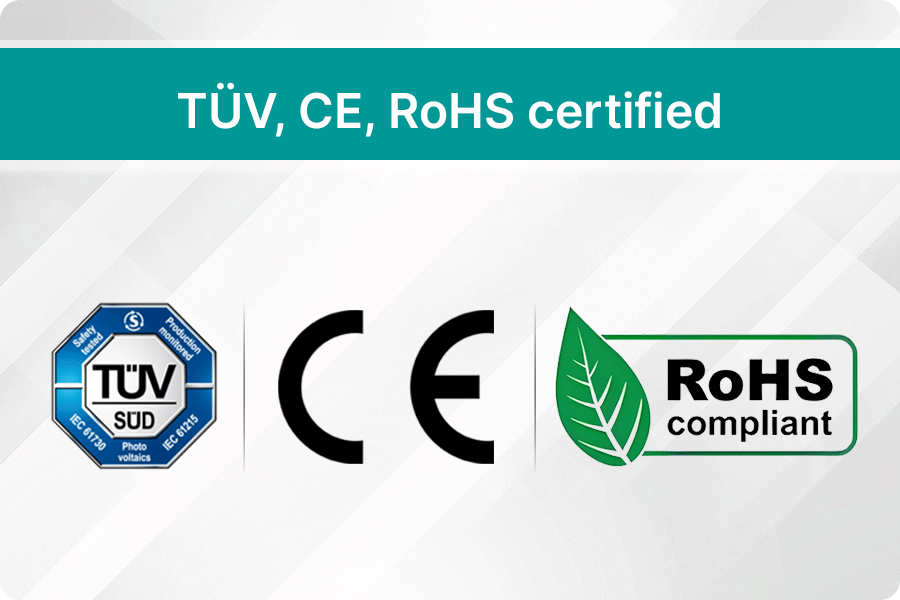
Under IEC (International Electrotechnical Commission) certification standards, photovoltaic modules must undergo systematic reliability and safety testing and be verified by independent bodies such as TÜV before entering the market, reducing early failure, electrical hazards and fire safety risks.
-
Certification testing also assesses power output, durability and degradation behaviour. Within ISO quality systems and unified testing frameworks, these standards create comparable benchmarks that support data-driven procurement decisions.
For photovoltaic investments that rely on stable long-term generation, module certification functions as both quality assurance and risk control. It ensures predictable performance across different climates and operating conditions, while providing a technical basis for financing, insurance and regulatory compliance.
Core International Certification and Testing Standards
In the global photovoltaic market, various certification systems exist, but the primary foundation for module reliability and safety comes from two key IEC (International Electrotechnical Commission) certification standards: IEC 61215 and IEC 61730. These standards are widely regarded as the technical entry threshold for photovoltaic modules in the European and global markets, and they serve as essential references in procurement decisions.
IEC 61215: Long-Term Reliability Verification
IEC 61215 focuses on evaluating the long-term reliability of photovoltaic modules. Through accelerated ageing and environmental stress testing that simulate real operating conditions, it assesses potential environmental risks during extended service life. Key tests include:
-
Thermal cycling and damp heat testing to assess material durability
-
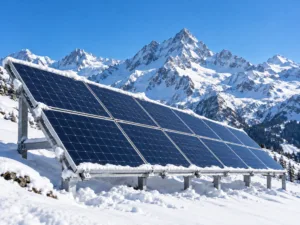
Mechanical load testing to verify resistance to wind and snow loads
-
UV ageing tests to examine performance stability under prolonged sunlight exposure
Certification under IEC 61215 indicates that a module has undergone systematic laboratory stress testing, improving the predictability of its long-term performance.
IEC 61730: Electrical and Structural Safety
IEC 61730 concentrates on the safety assessment of photovoltaic modules, ensuring that risks to people and equipment remain controlled during long-term operation. It evaluates electrical safety, insulation performance and safety risks arising from interaction with the external environment. Key aspects include:
-
Insulation and protection against electric shock
-
Fire safety risk assessment
-
Structural integrity verification of critical components
This certification standard is particularly important in commercial and industrial projects, as it directly affects system safety and regulatory compliance reviews. Testing is typically verified by independent third-party bodies such as TÜV to ensure objectivity and credibility.
Beyond these core IEC standards, the market also includes supplementary compliance and management certifications, such as the CE conformity mark, ISO quality management certification and certain regional industry standards. These certifications primarily reflect regulatory compliance and manufacturing system governance rather than directly assessing long-term module reliability and safety, and they are therefore generally used as supporting references in procurement decisions.
How Does Fire Safety Certification Influence Photovoltaic Module Selection?
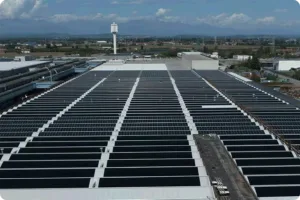
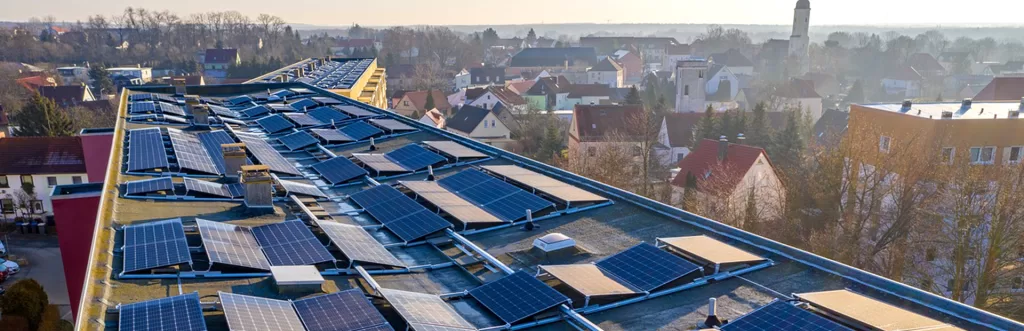
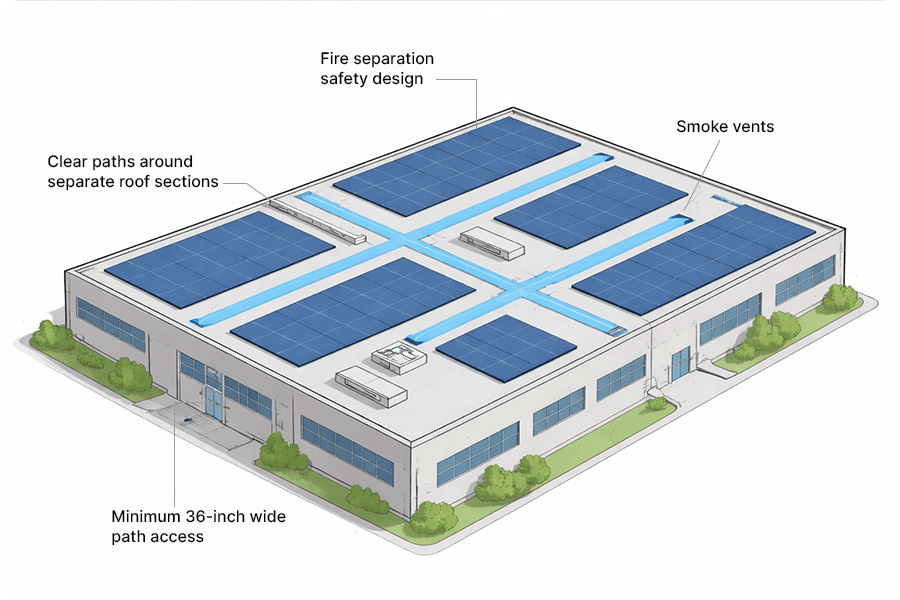
As photovoltaic systems are increasingly deployed on commercial and industrial rooftops, the fire safety performance of solar panels has become a key concern in the European market. Unlike ground-mounted plants, rooftop PV systems are directly integrated with building structures. Electrical faults or local overheating can therefore create cascading risks to building safety. As a result, fire safety ratings are now considered alongside electrical safety as critical selection criteria during project technical assessments.
In Europe, the fire performance of photovoltaic modules is typically evaluated under the EN 13501 building materials fire classification system. This certification standard provides a unified framework for testing and classifying how materials react under fire conditions, including the commonly referenced Broof rating for roofing systems. Modules tested under this system are more likely to meet building regulations and approval requirements, particularly in dense commercial buildings and public facilities.
From a structural perspective, different photovoltaic module technologies show practical differences in fire behaviour. Mainstream high-efficiency technologies such as IBC, TOPCon, and HJT often use double-glass encapsulation or enhanced glass–glass structures. These designs demonstrate more stable material behaviour at elevated temperatures and reduced flammability risk, making them better suited to rooftop applications from a fire safety standpoint.
Fire safety testing is typically carried out by independent third-party institutions to ensure objectivity and traceability. Specialist laboratories such as Istituto Giordano provide fire testing and certification services for building materials based on European standards, supporting project-level technical evaluations.
For purchasers, incorporating fire safety certification into module selection helps identify potential risks at the design stage and reduces uncertainty during approval and compliance processes. In commercial and industrial rooftop projects, priority should be given to modules certified under EN 13501 fire classifications, featuring stable double-glass encapsulation and supported by verifiable third-party test documentation. These factors are directly linked to system safety and long-term operational reliability.
Reliability Testing of Photovoltaic Modules in Special Environments
Beyond standard reliability and safety certification, certain environmental conditions place higher demands on the long-term operation of photovoltaic modules. In coastal, high-humidity, agricultural or high-voltage system settings, modules require targeted environmental testing to reduce the risks of material ageing, electrical degradation and structural damage. For projects exposed to specific environmental risks, specialised reliability testing therefore provides direct guidance for module selection.
Salt Mist Corrosion Testing: Coastal and High-Humidity Environments
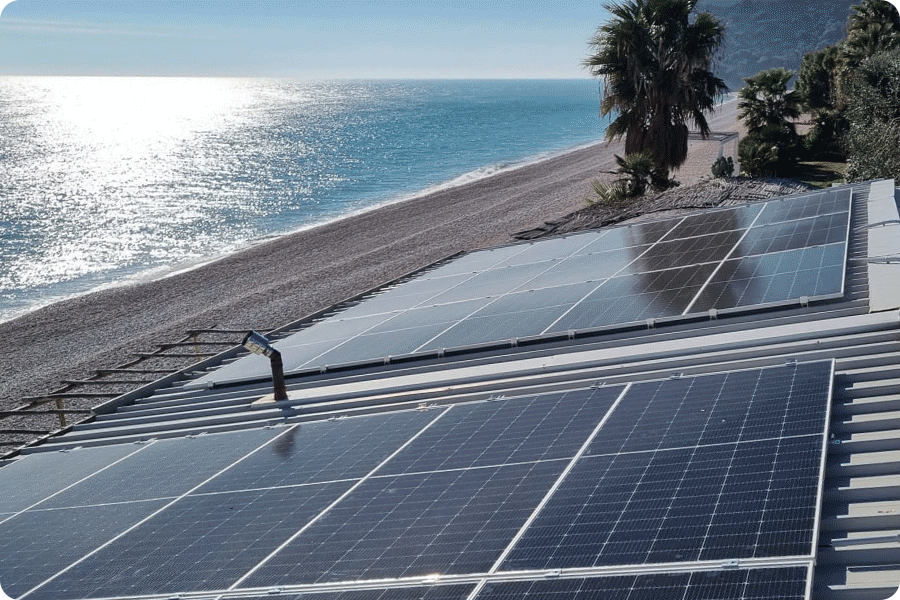
In coastal regions or areas where de-icing salt is frequently used in winter, airborne salt accelerates corrosion of metal components and encapsulation materials. To address this risk, photovoltaic modules are typically evaluated under the IEC 61701 salt mist corrosion test. This certification standard simulates prolonged exposure to saline environments and assesses the corrosion resistance of frames, cell interconnections and encapsulation materials.
As an independent engineering testing body, TÜV Rheinland has documented testing procedures and evaluation methods for photovoltaic modules in corrosive environments. These results offer important reference points for module selection in coastal and high-humidity projects. For systems exposed to long-term salt mist conditions, prioritising modules certified under salt corrosion testing helps reduce structural corrosion and performance degradation risks.
Ammonia Corrosion Testing: Agricultural and Industrial Environments
Near agricultural buildings or livestock facilities, elevated ammonia concentrations in the air can accelerate encapsulation ageing and contact failures if modules are not properly tested. The IEC 62716 ammonia corrosion test is specifically designed to evaluate module durability in ammonia-rich environments.
For farm rooftops or industrial storage facilities, selecting modules certified for ammonia resistance reduces the likelihood of material degradation and electrical connection failures, improving long-term system stability.
PID Resistance Testing: High-Voltage Systems
In high-voltage photovoltaic systems, potential-induced degradation (PID) can gradually reduce module performance. PID testing simulates long-term operating conditions under high temperature, humidity and voltage to evaluate resistance to performance loss.
For large commercial systems or high-voltage grid-connected projects, choosing modules with verified PID resistance certification helps maintain long-term energy yield and minimise hidden performance losses.
Selection Guidance
In projects exposed to special environments, module selection should not rely solely on power or efficiency ratings. Environmental adaptability must be assessed in relation to the specific application scenario. Confirming whether modules have passed salt mist, ammonia corrosion or PID resistance testing, and verifying the corresponding third-party certification documents, is a critical step in reducing long-term operational risk.
Certification Trends and Future Procurement Decisions
As the European photovoltaic market matures, module certification is evolving from a basic compliance requirement into a practical risk management tool. Procurement decisions are shifting from simple comparisons of power and price towards evaluating long-term reliability, safety performance and environmental adaptability. Photovoltaic systems are increasingly treated as long-term operating assets rather than one-off equipment purchases.
In commercial and industrial PV projects, certification frameworks are now closely linked to specific application scenarios. Fire safety ratings and specialised environmental testing are no longer optional add-ons but integral parts of comprehensive risk assessment. Module selection must therefore consider not only performance metrics but also operational stability under particular building and environmental conditions.
From a project perspective, module selection can be structured around three levels of evaluation:
-
Core reliability and safety certification: ensuring compliance with key IEC certification standards and a stable structural and electrical safety foundation
-
Scenario-specific testing: confirming whether additional fire safety, salt mist, ammonia corrosion or PID resistance certification is required for the project environment
-
Long-term operational risk assessment: matching the certification profile of the module to the building type and operating conditions
In practical project assessments, priority is increasingly given to modules with comprehensive certification coverage aligned with real risk scenarios. This risk-oriented selection approach is becoming standard practice in the European photovoltaic market.
It not only improves system safety and reliability but also provides clearer technical support for financing, insurance review and long-term operation and maintenance. Over time, certification-based risk evaluation will continue to shape future photovoltaic module procurement decisions.
Maysun Solar supplies solar panels for the European market that comply with international certification standards, covering mainstream technologies including IBC technology, TOPCon technology, and HJT technology. These products are engineered with a focus on long-term reliability, safety performance and environmental adaptability, making them suitable for a wide range of rooftop and system applications.
Reference
IEC 61215 — Terrestrial Photovoltaic (PV) Modules — Design Qualification and Type Approval. IEC Webstore. https://webstore.iec.ch/publication/61345
IEC 61730 — Photovoltaic (PV) Module Safety Qualification. IEC Webstore. https://webstore.iec.ch/publication/59803
P. F. Jack et al., PV Module Corrosion from Ammonia and Salt Mist — Experimental Study with Full-Size Modules, ResearchGate, 2016. https://www.researchgate.net/publication/308950750_PV_Module_Corrosion_from_Ammonia_and_Salt_Mist_-_Experimental_Study_with_Full-Size_Modules
TÜV Rheinland, Photovoltaic Module Testing and Certification Services. https://www.tuv.com/world/en/photovoltaic-modules.html
European Commission — Joint Research Centre (JRC), European Solar Test Installation (ESTI) — PV Performance and Reliability Research. https://joint-research-centre.ec.europa.eu/european-solar-test-installation_en
Recommend reading

PV Module Installation Beyond Rooftops: Multi-Scenario Applications for Bifacial N-Type Modules in Europe
PV module installation is not limited to rooftops. For residential users, small commercial users and distributed PV projects in Europe, spaces such as balconies, gardens, fences, carports, terraces, façades and pergolas can also provide additional installation areas when conditions allow. As solar use

Europe’s Grid Cap Era: Why High-Efficiency Solar Panels Matter More in 2026
Introduction In 2026, the economics of distributed solar in Europe are changing. Grid congestion, export limits, negative electricity prices and zero-export requirements mean that a solar project can no longer be judged only by how much electricity it generates. The more important question

How Do Solar Panel Delivery Delays Affect Installer Costs?
Solar panel delivery delays can affect installation schedules, project acceptance and payment collection.

The Forgotten “Invisible Assets”: Why Repowering Is the Strategic Key for European Solar in 2026
As grid congestion delays new solar projects across Europe, existing PV assets are becoming a strategic source of growth. This article explains why PV repowering can help EPCs and C&I asset owners unlock hidden value from already-connected solar plants, improve LCOE, and extend long-term asset performance with high-efficiency TOPCon, IBC and HJT modules.

Solar Panel Procurement in Europe: Why Stable Supply Matters More Than a One-Off Low Price
When European installers, distributors and corporate buyers choose solar panels, a one-off low price should not be the only factor. Stable supply, model continuity, technical documents and replenishment capacity often matter more for long-term cooperation and project delivery.

How Important Is the Temperature Coefficient When Choosing a Solar Panel?
How important is temperature coefficient when choosing a solar panel? This article answers that question directly and explains which projects should include it in early screening and which do not need to treat it as a top priority.


Good write-up. I absolutely love this website.
Stick with it!