Table of Contents
Introduction
Strong sunlight does not necessarily mean high power generation.
Although July and August bring the most intense solar irradiation, high temperatures often cause plant output to fall short of that in spring or early summer, as rising temperatures significantly reduce module efficiency and make it difficult for the system to maintain optimal performance.
Photovoltaic modules are tested under standard conditions of 25 °C, with temperature coefficients for different technologies ranging from -0.24%/°C to -0.44%/°C. When the temperature rises from 25 °C to 70 °C, output power can drop by 10%–20%, while 20–30 °C is closer to the ideal operating range.
The combination of high heat and humidity in midsummer not only weakens generation efficiency but also increases the thermal load on inverters, cables, and other components, putting pressure on the long-term stability of the power plant.
Why Does Higher Module Temperature Lead to Power Loss?
Because of the intrinsic temperature characteristics of photovoltaic modules, an increase in temperature results in a loss of output power. In hot summer conditions, the back side of a module can reach up to 70 °C, while the working layer of the solar cells inside may exceed 80 °C.
The power loss at different temperatures can be calculated using the formula:
PT = PSTC × [1 + γ × (Tc − 25)]
Where:
PT = Output power of the module at temperature Tc
PSTC = Rated power under standard test conditions (25 °C)
γ = Power temperature coefficient (a negative value, in /°C, e.g., -0.0032 represents -0.32%/°C)
Tc = Operating temperature of the module (°C)
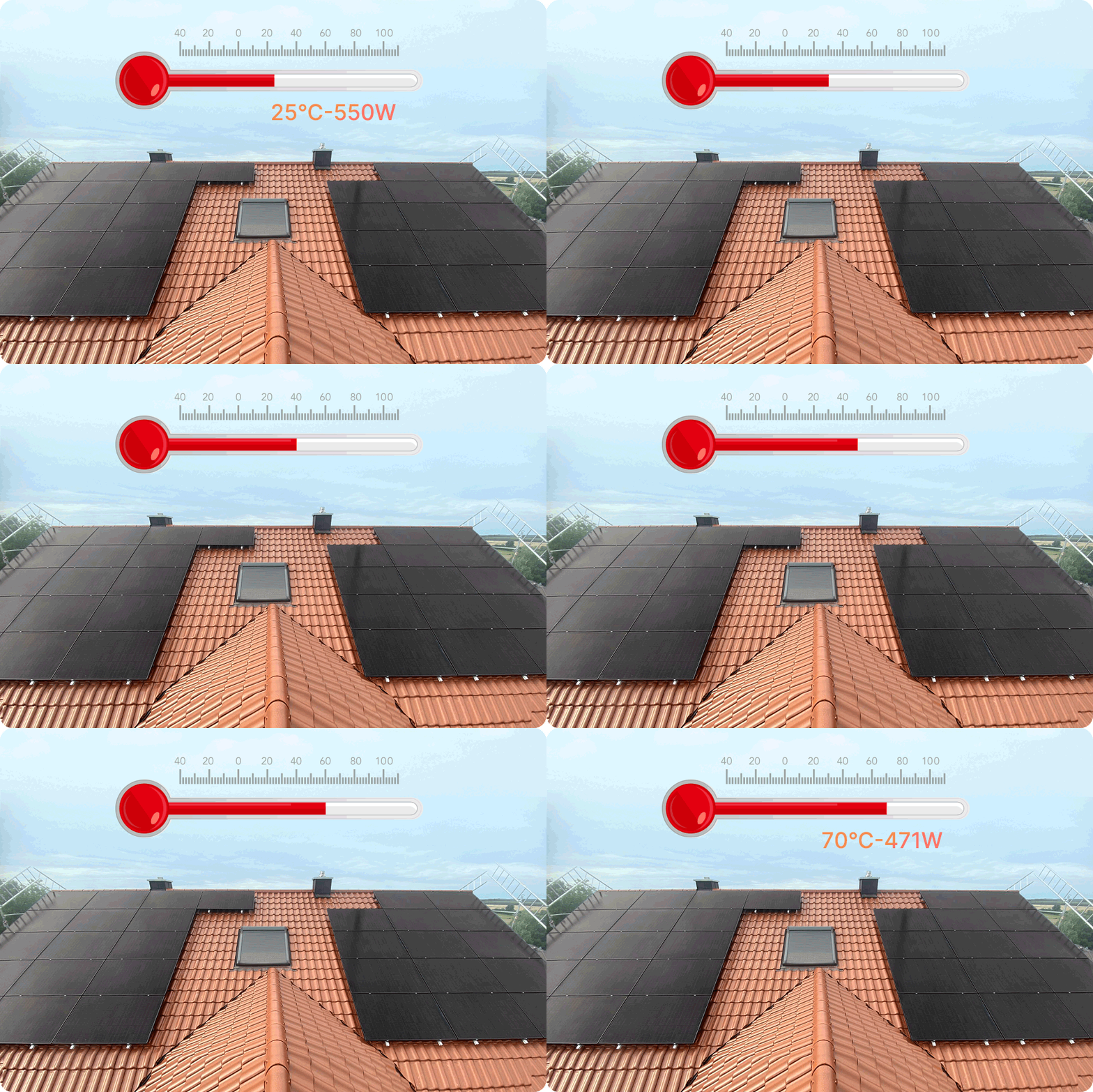
For a 550 W module, the power loss from 25 °C to 70 °C is as follows:
PERC technology: Temperature coefficient -0.35%/°C, power decreases by ~15.8%, output ~463 W
TOPCon technology: Temperature coefficient -0.32%/°C, power decreases by ~14.4%, output ~471 W
IBC technology: Temperature coefficient -0.29%/°C, power decreases by ~13.1%, output ~478 W
HJT technology: Temperature coefficient -0.243%/°C, power decreases by ~10.9%, output ~490 W
Whether in commercial or residential installations, roof structure significantly affects module heating. For example, on a metal sheet roof, modules at the edges stay cooler due to better ventilation, while those in the center reach higher temperatures. Field measurements by Fraunhofer ISE and TÜV indicate this difference can reach 5–10 °C, corresponding to a 3–5% variation in power generation. Similar effects occur on concrete roofs, membrane structures, and PV carports. If not properly addressed, these differences can drag down the performance of entire module strings, making it a key risk factor in system design and operation.
Four Impacts of High Temperatures on PV Modules
1. Reduction in module output power
As the temperature of a photovoltaic plant rises, the output power of PV modules continuously decreases. This is the most direct impact of high temperatures. Field data from Fraunhofer ISE and NREL show that crystalline silicon modules operating in environments around 20 °C can generate about 15%–20% more electricity than in high-temperature environments of 65–70 °C.
Under the same irradiation conditions, systems in cooler regions often achieve higher actual power generation, while those in hot regions are more prone to reduced output and efficiency losses.
How to reduce PV module heating in summer?
During summer operation, proper design and maintenance can effectively mitigate power losses caused by high temperatures:
Enhanced ventilation: Leave ventilation channels in rooftop installations to avoid hot spots forming in the center of arrays.
Elevated mounting: Use mounting structures to raise modules and increase airflow.
Light-colored roofs or reflective coatings: Reduce heat absorption and lower overall operating temperature.
2. Impact on the lifespan of inverter components
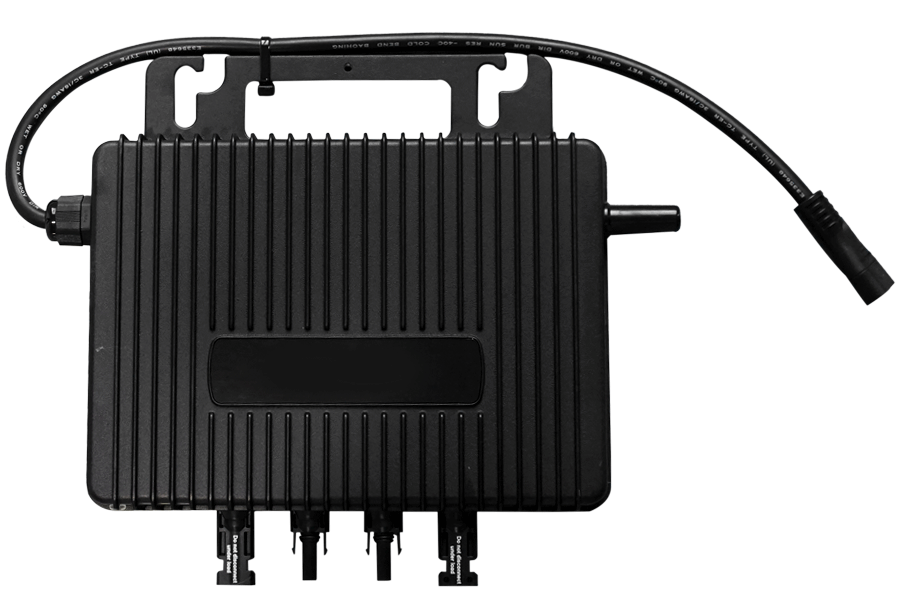
In photovoltaic systems, inverters—like modules—are highly sensitive to high temperatures. They are made up of numerous power semiconductors, capacitors, inductors, and other components that naturally generate heat during operation. When combined with excessive ambient temperatures, this can easily lead to reduced efficiency and shortened service life. Once the inverter housing temperature exceeds 60–65 °C, the system typically triggers automatic derating protection to prevent failure risks. In summer heat, PV plants may not only suffer from reduced power generation but also face further revenue losses due to inverter overheating.
How to reduce inverter heating in high-temperature environments?
Proper ventilation and protective strategies are critical for the long-term stable operation of inverters:
Optimized installation and layout: Place inverters in well-ventilated areas, avoiding direct midday sunlight or rooftop heat island zones.
Shading combined with cooling: Use protective covers or shading panels to reduce direct solar exposure while ensuring smooth airflow.
Cable and equipment planning: Arrange cabling logically with sufficient spacing to prevent localized heat buildup affecting overall cooling.
Advanced cooling solutions: In large-scale plants, liquid-cooled inverters are increasingly replacing traditional air-cooled designs, while in commercial and industrial settings, intelligent air cooling and optimized airflow channels are becoming mainstream to cope with more frequent extreme heat.
3. Hot-spot effect and its impact on module lifespan
Excessive localized heating can trigger the hot-spot effect, potentially shortening module lifespan by 20%–30%. The mechanism occurs when shaded cells are forced to carry reverse current, which converts into heat and causes rapid local temperature increases.
Over long-term operation, these hot-spot areas can accelerate encapsulant aging, lead to cell cracking, and in severe cases, cause complete module failure. During high-temperature seasons, PV modules are more likely to be affected by bird droppings, fallen leaves, dust buildup, or partial shading. Even when ambient air temperature is only 35 °C, local hot spots can quickly rise above 100 °C, resulting in significant string power loss.
How to detect and prevent hot spots in PV systems?
To avoid power losses and safety risks caused by hot spots, layered measures should be taken during both design and operation:
Infrared thermography: Carry out regular thermal imaging inspections during high-temperature seasons to identify local hot spots early.
Optimized layout and module selection: Improve array design to minimize shading risks.
Module protection and cleaning: Clean bird droppings, dust, and debris regularly to reduce the chance of obstruction.
Bypass diodes and advanced materials: High-quality bypass diodes and improved encapsulation processes can effectively reduce the destructive effects of hot spots.
4. PID effect leading to component failure
The PID (Potential Induced Degradation) effect refers to performance degradation in PV modules caused by ion migration under conditions of high voltage, high temperature, and high humidity. It often manifests as a rapid drop in module power in the short term and accelerated failure over the long term. In extreme environments, PID can reduce module efficiency by 10%–30% and significantly shorten service life.
PID is more likely to occur in coastal areas with high humidity and salt-mist concentration, and the risk becomes even greater when combined with summer heat. However, PID was first identified as early as 2005, and with years of research and material improvements, modern high-quality modules have greatly reduced this risk.
How to prevent PID in solar modules?
Industry practices show that the following measures can effectively reduce the probability of PID occurrence:
Electrical design: Proper grounding, or applying reverse voltage to the module at night to neutralize accumulated charges.
Glass-glass structure: Using dual-glass designs to reduce moisture ingress and ion migration, significantly improving long-term reliability.
Maysun Solar provides high-quality photovoltaic modules and solutions, covering everything from industrial rooftops to balcony systems. With IBC technology, HJT technology, and TOPCon technology, we ensure high efficiency and reliability even under high-temperature conditions.
Reference
Fraunhofer ISE. (2025). Photovoltaics Report 2025. Fraunhofer Institute for Solar Energy Systems. https://www.ise.fraunhofer.de/en/publications/studies/photovoltaics-report.html
National Renewable Energy Laboratory (NREL). (2025). Photovoltaic Performance: Real-Time PV Solar Resource Testing. U.S. Department of Energy. https://www.nrel.gov/pv/real-time-photovoltaic-solar-resource-testing.html
DNV. (2021). PV Module Reliability Scorecard 2021. DNV Energy Systems. https://2021modulescorecard.pvel.com/2021-pv-module-reliability-scorecard/
Kiwa PVEL. (2025). PV Module Reliability Scorecard 2025. Kiwa PVEL. https://scorecard.pvel.com/
Maysun Solar. (2025). Solarmodul‑Hotspot‑Risiken und Prävention – Leitfaden. Maysun Solar Deutschland Blog. https://www.maysunsolar.de/blog/solarmodul-hotspot-risiken-und-praevention-leitfaden
Recommend reading

Low-Carbon PV Procurement in France: Why ECS, PEP Ecopassport and Solar Carports Matter
Table of Contents France is becoming one of Europe’s most documentation-driven solar markets. For EPC companies, developers and commercial project owners, module selection is no longer based only on price-per-watt, efficiency or linear power warranties. Carbon documentation, supply-chain traceability and project-specific compliance files

PV Module Installation Beyond Rooftops: Multi-Scenario Applications for Bifacial N-Type Modules in Europe
PV module installation is not limited to rooftops. For residential users, small commercial users and distributed PV projects in Europe, spaces such as balconies, gardens, fences, carports, terraces, façades and pergolas can also provide additional installation areas when conditions allow. As solar use

Europe’s Grid Cap Era: Why High-Efficiency Solar Panels Matter More in 2026
Introduction In 2026, the economics of distributed solar in Europe are changing. Grid congestion, export limits, negative electricity prices and zero-export requirements mean that a solar project can no longer be judged only by how much electricity it generates. The more important question

How Do Solar Panel Delivery Delays Affect Installer Costs?
Solar panel delivery delays can affect installation schedules, project acceptance and payment collection.

The Forgotten “Invisible Assets”: Why Repowering Is the Strategic Key for European Solar in 2026
As grid congestion delays new solar projects across Europe, existing PV assets are becoming a strategic source of growth. This article explains why PV repowering can help EPCs and C&I asset owners unlock hidden value from already-connected solar plants, improve LCOE, and extend long-term asset performance with high-efficiency TOPCon, IBC and HJT modules.

Solar Panel Procurement in Europe: Why Stable Supply Matters More Than a One-Off Low Price
When European installers, distributors and corporate buyers choose solar panels, a one-off low price should not be the only factor. Stable supply, model continuity, technical documents and replenishment capacity often matter more for long-term cooperation and project delivery.