Table of Contents
Introduction
In today’s market, dual-glass photovoltaic modules such as TOPCon and HJT remain the preferred choice for most investors. However, as IBC technology matures and finds broader application, single-glass IBC photovoltaic modules are gradually emerging as another compelling option.
With their back-contact design and higher efficiency, they offer unique advantages in terms of weight, aesthetics, structural reliability, and return on investment, enabling IBC modules to maintain strong competitiveness alongside the dual-glass mainstream.
Reliability and Structural Advantages of IBC Photovoltaic Modules
In the evolution of the photovoltaic market, single-glass modules are not new. Single-glass modules represented by PERC technology once dominated the mainstream market, with many early power plants still operating stably for over a decade. Even beyond their warranty period, they continue to deliver solid performance.
This fully demonstrates the long-term reliability of the single-glass structure.
As a representative of the new era, single-glass IBC modules not only perform better under weak-light conditions but also show clear advantages over PERC in overall performance:
Performance Comparison of IBC and PERC Single-Glass Solar Modules (Same Dimensions: 1722mm × 1134mm × 30mm, 182mm, 108 cells)
| IBC 460W Single-Glass Module | PERC 420W Single-Glass Module | |
|---|---|---|
| Conversion Efficiency | 23.5% | 21.5% |
| Temperature Coefficient | -0.29%/℃ | -0.35%/℃ |
| First-Year Degradation | 1.5% | 2% |
| Annual Degradation After First Year | 0.4% | 0.45% |
| Power Density | 235.5 W/m² | 215.0 W/m² |
Note: Data is based on Maysun Solar’s product line and publicly available parameters of mainstream PERC single-glass modules, referencing TÜV Süd and IEC 61215/IEC 61730 testing standards. Both modules share the same dimensions (1722 × 1134 mm, 182 mm, 108 cells). Actual performance may vary depending on climate conditions.
These technical features of IBC photovoltaic modules translate into stronger practical value:
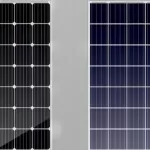
Back-contact design with no front busbars, increasing the light-receiving area by about 2.5%
Reflectivity as low as 1.7%, effectively reducing glare pollution
Excellent temperature coefficient of -0.29%/°C, ensuring stable power generation in high-temperature conditions
Full-black aesthetics and lighter weight, making them suitable for a wider range of rooftops while reducing transportation and installation costs
In summary, with superior efficiency and stability, IBC photovoltaic modules demonstrate advantages over PERC in both return on investment and application scenarios. These strengths are what make IBC technology increasingly favored in the market.
Safety and Returns of IBC Photovoltaic Modules
For most users and investors, the main concerns about choosing single-glass modules revolve around “fire safety” and “moisture ingress”.
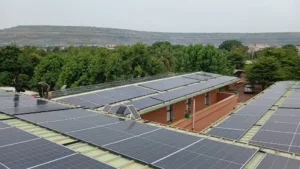
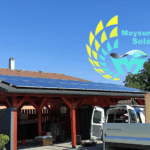
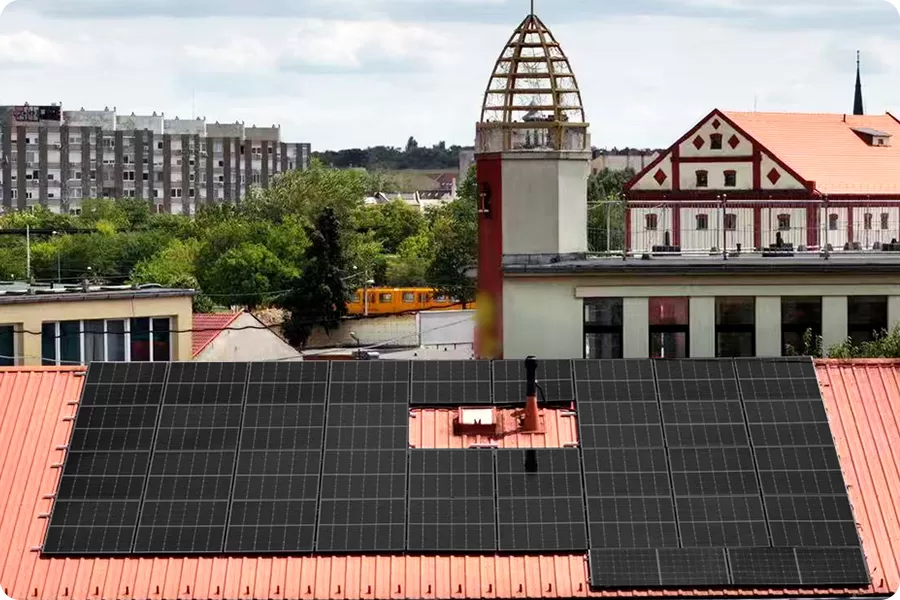
Note: The project adopted single-glass IBC modules, ensuring stable operation of the photovoltaic system.
Fire Safety: Maysun Solar’s IBC modules are tested according to international safety standards such as IEC 61730, offering excellent fire resistance and fully meeting the basic safety requirements of the European market.
Moisture and Weather Resistance: With optimized encapsulation materials and frame sealing processes, Maysun Solar ensures effective protection against moisture penetration into the cell layers. Even in coastal, humid, or long-term high-temperature environments, the modules maintain stable output and prevent performance degradation.
Warranty: Compared to the typical 15-year warranty of PERC products, IBC modules provide a 25-year product and performance dual warranty, ensuring longer service life and stable investment returns.
Another key question for buyers is whether returns can be secured.
Taking a 10 kW rooftop project as an example, comparing IBC 425W with TOPCon 425W modules:
Conversion efficiency: IBC 425W – 21.8%, TOPCon 425W – 21.76%
Temperature coefficient: IBC −0.29%/°C, TOPCon −0.32%/°C
Assumed annual full-yield: 1,200 kWh/kW
Scenario gain: IBC +2% (derived from IBC’s better temperature coefficient difference of ~0.8–1.0%, optical improvements from no front shading and low reflectivity ~0.6–1.0%, plus marginal advantage under low-light conditions ~0.2–0.5%; combined total ~1.6–2.5%, with 2% taken here as a conservative estimate).
Yield Comparison of IBC vs. TOPCon in a 10kW Project
| IBC 425W Full Black Single-Glass Module | TOPCon 425W Full Black Dual-Glass Module | Relative Advantage of IBC | |
|---|---|---|---|
| Conversion Efficiency | 21.8% | 21.76% | ≈ +0.04 pp |
| Power Retention at High Temperature (65℃) | 88.4% | 87.2% | +1.2 pp |
| Performance Gain | 2% | / | +2 pp |
| Annual Yield | 12,384 kWh | 12,000 kWh | +384 kWh/year (+3.2%) |
Note: The difference in power retention is calculated based on a module operating temperature of 65℃. With a temperature coefficient of −0.29%/℃ for IBC and −0.32%/℃ for TOPCon, the power loss at 40℃ above STC is 11.6% and 12.8% respectively, a difference of 1.2 percentage points. This means that under summer high-temperature conditions, an IBC module can deliver about 120 W more output than TOPCon in a 10 kW system.
Therefore, even with nearly identical nameplate efficiencies, IBC modules deliver additional generation advantages under high-temperature and real-world conditions, ensuring higher annual yields and faster payback periods.
Conclusion
Single-glass IBC photovoltaic modules have proven their reliability and durability, maintaining stable power generation in high-temperature environments thanks to their superior temperature coefficient. Compared with mainstream dual-glass or PERC modules, they offer equally competitive annual yields and payback periods. For this reason, single-glass IBC continues to gain market recognition alongside the dual-glass mainstream.
ChatGPT 说:
By adopting advanced IBC technology, Maysun Solar has launched high-efficiency IBC photovoltaic modules. The back-contact design not only increases power density but also delivers excellent low-light performance, ensuring more stable and reliable operation under Europe’s limited rooftop space and variable light conditions. IBC modules provide efficient and long-lasting photovoltaic solutions for both commercial and residential rooftops.
Recommend reading

When does HJT bifacial gain pay off on European rooftops, and when is IBC the better option?
When do HJT bifacial solar panels generate stronger returns on European rooftop projects, and when should IBC solar panels take priority?

Which homes are suitable for garden solar?
Which homes are suitable for garden solar? Assess space, shading, orientation and electricity-use goals to quickly judge whether garden solar is a suitable option.

Are Differences Between Solar Panels More Noticeable in High-Temperature Conditions?
High temperatures reduce solar panel efficiency, but the gap in summer power generation is not determined by temperature alone. This article compares the high-temperature performance of HJT, TOPCon and IBC, and explains how businesses should choose.

Why Have N-Type TOPCon Solar Panels Become the Market Mainstream?
N-type TOPCon solar panels have become one of the mainstream photovoltaic technologies thanks to their strong balance of efficiency, cost and mass-production maturity. This article briefly explains their structural features, practical advantages and typical application scenarios.

April News from the European Solar Industry
The European solar market is showing clear signs of recovery: system value is being reaffirmed, German auction prices are stabilising, Italy’s rules are becoming clearer, and revenue certainty in France is improving.

When Are More Expensive N-Type Solar Panels Worth Choosing?
Whether N-type solar panels are worth the extra cost depends on whether project duration, temperature load and roof conditions can turn that added cost into real returns.