
How Are Solar Panels Manufactured? Processes&production

How Are Solar Panels Manufactured? Processes&production

The overall solar module quality originates from both materials and craftsmanship. Understanding how a module is made helps evaluate its reliability and the supplier’s technical capability.

Full solar module production video – 10 key steps

Table of Contents

What Materials Make Up a Solar Module?

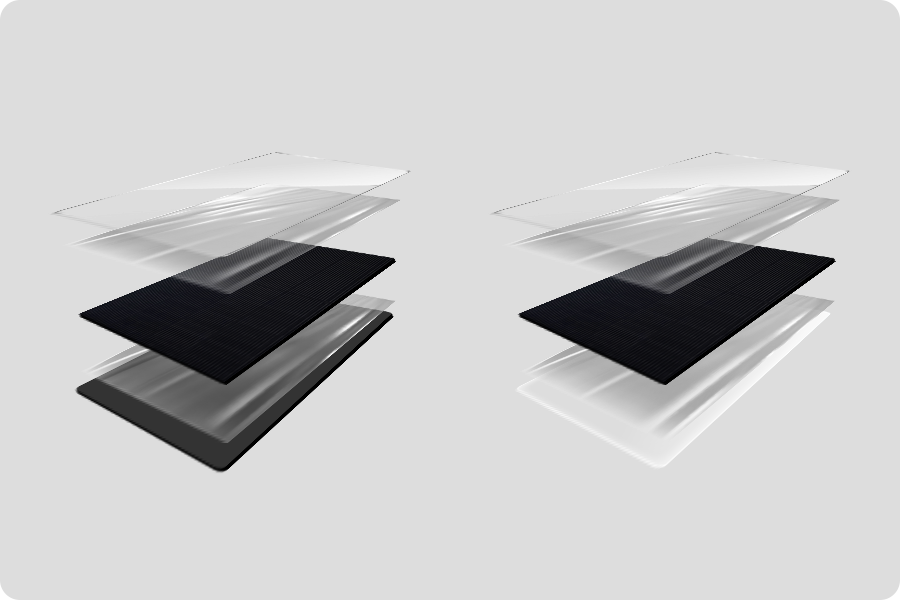
A solar module is built from multiple functional layers. A typical structure includes:

  • Front glass: Provides mechanical protection while ensuring high light transmittance.

  • Encapsulant layer (EVA/POE): Secures the cells and prevents moisture ingress.

  • Solar cells (monocrystalline silicon): Perform the photovoltaic conversion and define the core performance of the module.

  • Backsheet or rear glass: Ensures insulation, moisture resistance and long-term weather durability.

  • Aluminium frame and junction box: Enhance structural strength and provide electrical output.

Diagram comparing the structure of single-glass and dual-glass modules.

The lifespan of a module depends on the stability of the entire material system. In many project acceptance inspections, factors such as the crosslinking degree of the encapsulant, the weather resistance of the backsheet, and the sealing of the junction box have a greater impact on long-term outdoor durability than the quality of any single material alone.

From Silicon to Solar Cells: Why the Production Process Shapes Solar Module Quality

Solar cells are the core of every module, and their reliability depends on each manufacturing step—from raw silicon to finished cells. This is also why different solar module manufacturers show noticeable differences in efficiency, degradation behaviour and long-term stability.

Diagram showing the main processing steps from wafer to solar cell, including diffusion, passivation and electrode formation.

2.1 From Silicon to Wafers: Purity Sets the Upper Limit of Power Output

Purified quartz is processed into solar-grade silicon, then grown into ingots and sliced into wafers (with M10 and G12 now mainstream).
Higher purity and a more uniform crystal structure lead to better module efficiency and durability.

2.2 From Wafers to Solar Cells: Processes Determine Electrical Performance

Key steps include:

  • Diffusion to form the P–N junction

  • Passivation layers, which affect degradation and low-light performance

  • Silver grid lines, which determine conductivity

How well these processes are controlled ultimately appears in power consistency and long-term degradation behaviour.

2.3 Different Cell Technologies: Impact on Long-Term Performance

  • TOPCon: High efficiency with strong PID resistance

  • HJT: High bifaciality and strong output under low-light conditions

  • IBC: Front-grid-free design with minimal shading loss

Each technology influences long-term solar module quality differently.

The quality of the solar cell sets the upper performance limit of a module; encapsulation can only minimise losses—it cannot compensate for defects introduced earlier. Therefore, when assessing a supplier, it is essential to examine both their cell supply chain and the stability of their process control.

How Are Solar Modules Manufactured in Ten Steps?

The manufacturing process is the key factor that creates quality differences between modules. From solar cells to the finished product, a module typically goes through ten critical steps—the stages that procurement teams and installers should pay closest attention to.

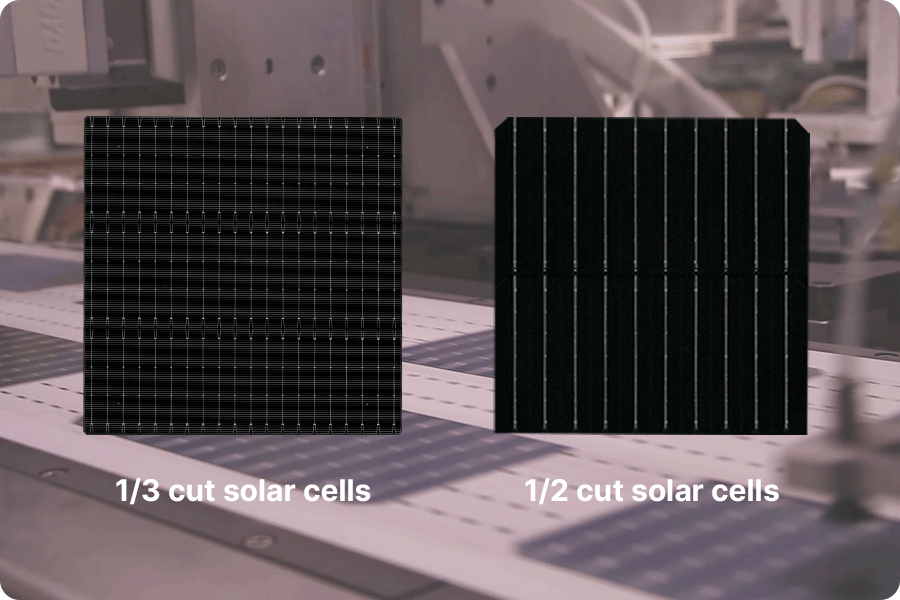
Step 1: Cell Cutting (Half-Cut / 1/3-Cut)

Laser cutting divides full cells into half-cut or 1/3-cut pieces. This reduces string current, lowers hotspot risk and power loss, and improves overall power consistency. All cut cells are then binned and tested to ensure there are no micro-cracks or damage.

Step 2: String Welding

Busbars are soldered to the front and rear of the cells at high temperature to form complete cell strings. Modern production lines rely heavily on automated welding, but critical points still require manual inspection. Welding quality directly affects long-term stability, including thermal-cycle resistance and micro-crack risk.

Step 3: Lay-Up

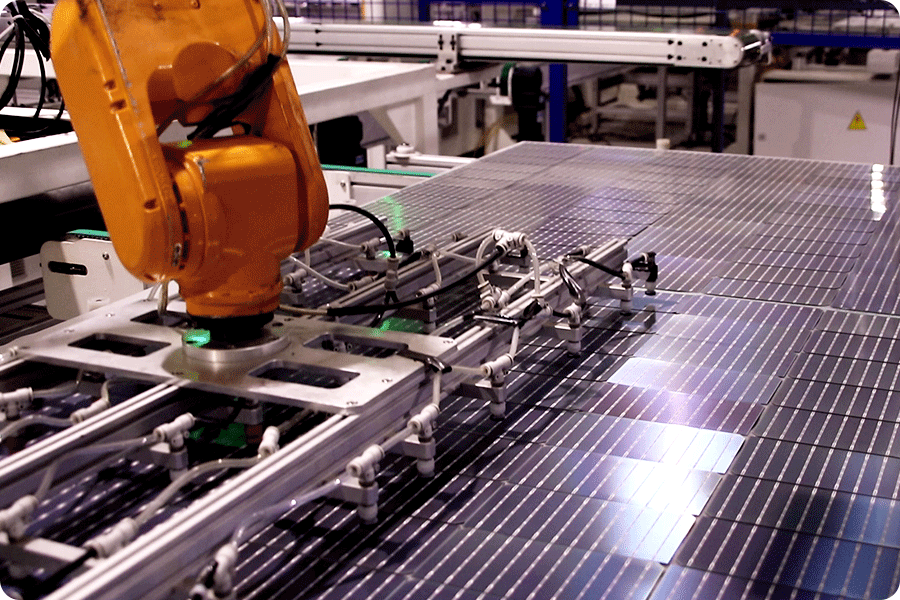
Cell strings are placed onto EVA-coated glass with a fixed spacing of 2–5 mm to avoid stress concentration at weld points and to enhance light reflection between gaps. A second layer of EVA and the backsheet or rear glass is then laid on top.

Cell strings positioned on EVA-coated glass, ready for the next step.

Step 4: Pre-Lamination EL Inspection

EL (electroluminescence) imaging checks for micro-cracks, dead cells, dark areas and short circuits. This step is essential to prevent defects from being encapsulated permanently inside the module.

Step 5: Lamination

Under heat and pressure, the glass, encapsulant, cell strings and backsheet fuse into a single, stable structure. After lamination, the module must cool in a flat position to maintain structural integrity and prevent warping.

Step 6: Trimming and Framing

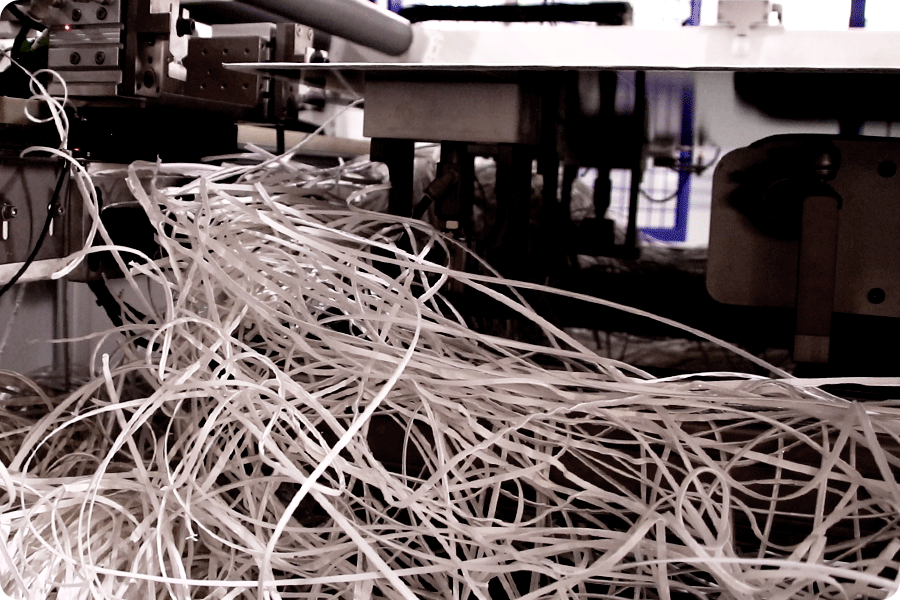
Excess EVA around the edges is trimmed to ensure uniform appearance and dimensions. An aluminium frame is then installed to improve wind and snow-load resistance, as well as transport durability. The sealing quality of the frame adhesive is critical for long-term waterproof performance.

Step 7: Junction Box Installation

The junction box is soldered to the bus ribbons and sealed. The bypass diodes inside the junction box determine hotspot mitigation performance, so both soldering and sealing must be tightly controlled.

Step 8: Curing

The module is left to cure for 10–12 hours, allowing the encapsulant to stabilise fully and preventing later issues such as partial delamination or material shifting during transport or installation.

Step 9: Three Critical Outgoing Tests

Before leaving the factory, every module must undergo:

  • Insulation test: Ensures no leakage current

  • IV curve test: Confirms power, current and voltage match the rated values

  • Second EL inspection: Compares results with pre-lamination EL to eliminate undetected defects

Production lines using a double-EL process significantly reduce micro-crack misses—an important indicator of high-quality solar module manufacturing.

Step 10: Packaging

Modules are packed according to export logistics standards: reinforced corner protection, moisture-proof film, and a compression-resistant stacking design to reduce transport damage during long-distance shipping.

Which Tests Determine the Quality of a Solar Module?

While the manufacturing process sets the baseline of a module’s performance, testing is what verifies whether those processes are truly reliable. For procurement teams, the standardisation and transparency of the testing workflow are even more important than the tests themselves.

4.1 Which Factory Tests Best Reflect Module Performance?

  • IV curve test: Confirms whether the power, voltage and current meet the rated specifications.

  • EL imaging: Detects micro-cracks, dead cells, dark areas and other defects invisible to the naked eye.

A double-EL process (before and after lamination) is one of the most effective ways to distinguish a mature solar module manufacturer from a simple contract assembler.

4.2 Which Long-Term Reliability Tests Reveal Process Quality?

These tests simulate 20–25 years of outdoor operation:

  • Thermal Cycling (TC): Exposes potential damage from mismatched thermal expansion between materials and solder joints.

  • Damp Heat (DH): Verifies the long-term weather resistance of the backsheet, encapsulant and junction box.

  • PID (Potential Induced Degradation): Evaluates how the module behaves under high-voltage stress.

Passing these long-term tests requires not only good materials but also stable, well-controlled manufacturing processes, which ultimately define solar module quality.

4.3 What Can Testing Processes Reveal About Supplier Reliability?

Most suppliers provide an outgoing quality control (OQC) report. Although it may not correspond precisely to each batch, it at least indicates whether basic tests were performed before shipment.

When assessing supplier reliability, the key factors are:

  • Whether they are willing to provide genuine, verifiable test documents

  • Whether the documentation is clear and not oversimplified

  • Whether they cooperate with retesting or supplementary checks when issues arise

In many European project inspections, disputes often come from unclear test execution, missing documentation or poor communication—not from the module itself.

Therefore, a supplier’s true reliability lies in information transparency and willingness to resolve issues, rather than whether their internal processes claim to meet a Tier-1 standard.

TOPCon, HJT and IBC: How Do These Technologies Differ and How Do They Influence Module Selection?

Different cell technologies do not change the basic structure of a solar module, but they do affect encapsulation, welding methods and, ultimately, the application scenarios in which each module performs best.

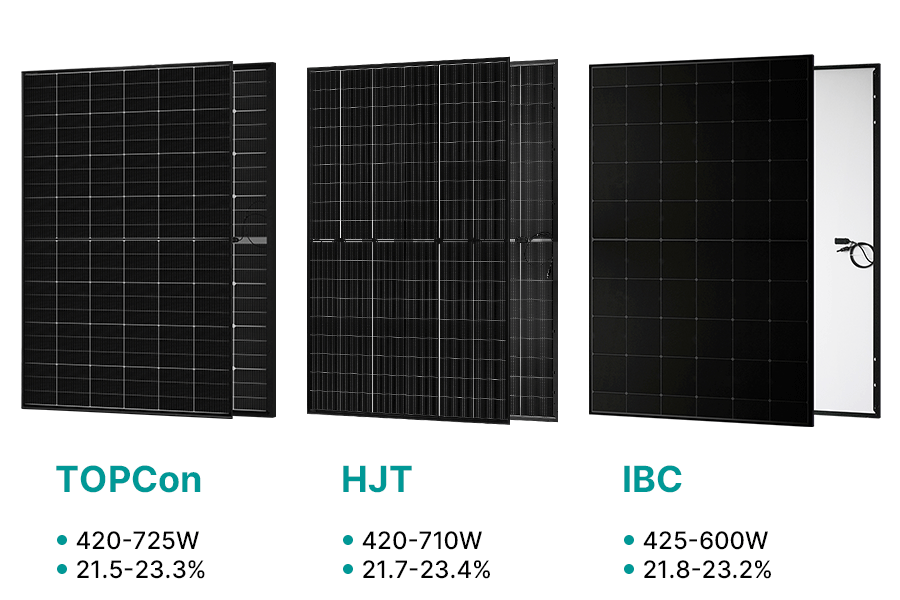
Power and efficiency ranges of today’s mainstream TOPCon, HJT and IBC solar technologies.

5.1 TOPCon Modules: Mainstream, Stable and Fully Industrialised

TOPCon modules are highly compatible with existing manufacturing lines and deliver mature performance in efficiency, degradation control and batch-to-batch stability. This makes them the most common choice for residential and general commercial rooftops.

Key advantages include a well-developed supply chain and large-scale production capacity—ideal for budget-sensitive projects seeking long-term returns.

High-quality TOPCon modules typically show:

  • Minimal power deviation between batches, ensuring consistent output

  • Clean EL images and stable degradation curves

With improvements in laser cutting and welding processes, 1/3-cut TOPCon modules—offering lower current and more uniform thermal distribution—are increasingly adopted across Europe for their strong high-temperature and long-term stability.

5.2 HJT Modules: High Bifaciality and Low Temperature Coefficient

HJT modules are produced using low-temperature processes and are known for their high bifaciality and excellent temperature coefficient.

They are well-suited to high-latitude regions, weak-light environments and hot summer conditions—particularly where power generation per square metre is a critical design constraint, such as compact commercial rooftops or projects focused on long-term financial performance.

Stable HJT modules typically demonstrate:

  • Uniform film deposition, resulting in smaller cell-to-cell variation

  • Stable bifacial response, improving predictability in energy yield and financial modelling

5.3 IBC Modules: No Front Busbars and Excellent Low-Light Performance

IBC modules place all electrodes on the rear side, leaving the front surface free of busbars. This maximises light capture, enhancing output under low-light and oblique-light conditions.

Their visually uniform appearance also makes them a popular choice for high-end residential projects, architectural façades and installations requiring premium aesthetics.

High-quality IBC modules usually feature:

  • Precise alignment of rear-side metallisation, ensuring strong string consistency

  • Stable output under low-light conditions and smoother long-term degradation behaviour

Comparison of TOPCon, IBC and HJT Technologies

Power Output Range Efficiency Range Temperature Coefficient Bifaciality Degradation
TOPCon 420W–725W 21.5%–23.3% ≈ -0.30%/°C 80–85% Year 1 ≈ 1.5%, annual ≈ 0.4%
HJT 420W–710W 21.7%–23.4% ≈ -0.24%/°C 90–95% Year 1 ≈ 1.0%, annual ≈ 0.35%
IBC 425W–460W 21.7%–23.2% ≈ -0.29%/°C Single-glass Year 1 ≈ 1.5%, annual ≈ 0.4%

Note: The parameter ranges listed are based on commonly available industry products. Actual values may vary depending on material systems and manufacturing processes and are intended solely for comparing different technology routes.

Conclusion: How Can You Determine Whether a Solar Module Supplier Is Truly Reliable?

Assessing whether a solar module manufacturer is suitable for long-term cooperation depends on several core factors: the standardisation of its production processes, the transparency of its testing system, and—critically—the long-term stability of its supply chain. Manufacturers that consistently maintain material uniformity, stable batch quality and full process traceability are far more likely to deliver modules that perform reliably in Europe for 25 years or more.

For European businesses and installers, the most important considerations include whether the supplier:

  • Has local warehousing capacity

  • Can continuously supply mainstream technologies (such as TOPCon, HJT and IBC) in stable volumes

  • Has proven experience in export certification and project delivery

In long-term cooperation with European installers, the factors that most often affect project stability are not individual manufacturing steps, but batch management, local inventory and consistency in technology. When the supply chain becomes unstable, even good single-module quality cannot prevent a significant rise in project risk.

A reliable supplier is one that delivers the same level of quality in every batch—consistently, transparently and sustainably.

As a solar module supplier with deep experience in the European market, Maysun Solar has accumulated extensive real-world data on manufacturing consistency and batch stability through long-term project delivery. Our 420W–725W modules range covers mainstream technologies including IBC technologyTOPCon technologyand HJT technology, all produced using standardised processes and a comprehensive testing system to ensure stable, traceable long-term performance across a wide variety of rooftop applications.

Recommend reading

February News in the Photovoltaic Industry

February News in the Photovoltaic Industry

February overview of Europe’s photovoltaic market: module price trends, a rebound in the German PPA market, progress in Italian agrivoltaics and regulatory shifts in France, highlighting key industry signals.


Read More »

1 Comment

  1. Gordon Jackson

    Clear overview of the manufacturing steps and, more importantly, how process control affects long-term module quality.
    The explanation around EL inspection, lamination and outgoing tests is particularly useful for understanding why modules that look similar on paper can behave very differently over time.

Comments are closed